

Can You Automate an Entire Data Pipeline Using Only Python?
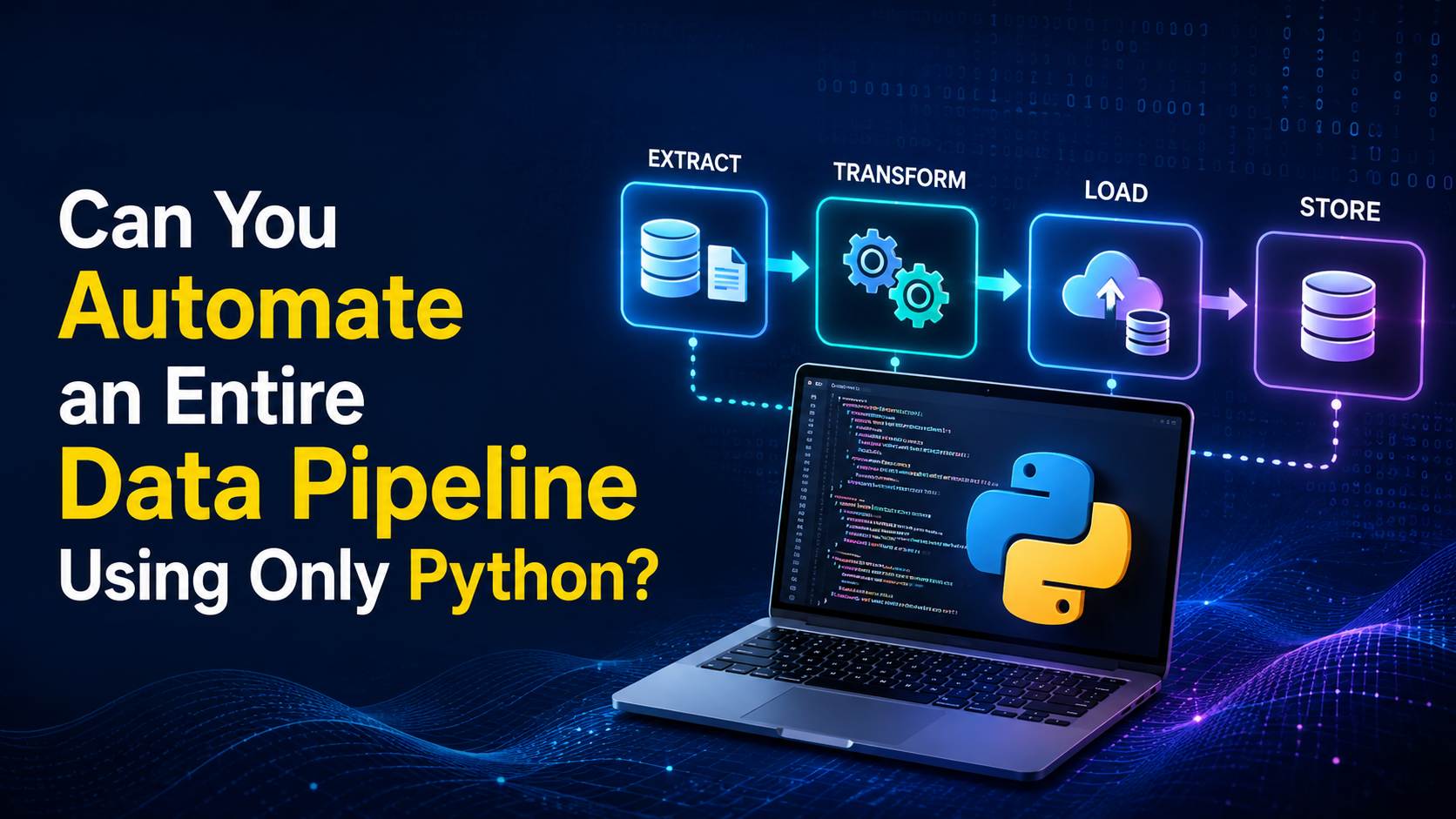
In most real-world cases, a full pipeline can run on Python alone, from pulling raw numbers off a website to landing them, cleaned and structured, in a spreadsheet or database. Extraction, transformation, and loading can all happen within the same script, using the same language, without switching tools halfway through. That kind of end-to-end control is exactly what draws so many people toward a data engineering course in Aurangabad in the first place.
Python sits at the centre of that shift, and one question comes up more than almost any other in these courses: can the whole pipeline really run on Python alone, or does it always need help from somewhere else?
Table of Contents
- Can Python Alone Build and Run a Full Data Pipeline Without Other Tools?
- What Are the Limits of Using Only Python for Large-Scale Automation?
- Which Python Libraries Come Closest to Replacing Dedicated Pipeline Tools?
- When Does a Python-Only Pipeline Start to Break Down in Production?
- Do You Eventually Need Tools Like Airflow or Spark Alongside Python?
Can Python Alone Build and Run a Full Data Pipeline Without Other Tools?
A single Python script is capable of running a complete pipeline end to end: extracting raw data, transforming it into a usable shape, loading it into storage, and even triggering alerts if a step fails. This is what makes Python-based data pipeline automation so practical; one language covers extraction, cleaning, storage, and monitoring without gaps that need to be filled by other tools.
What Are the Limits of Using Only Python for Large-Scale Automation?
Python’s limits become clear once the data outgrows a single machine’s memory. Basic libraries that work fine on modest datasets start to slow down or fail outright when asked to process multi-terabyte volumes in memory. So if you’re asking “Is Python enough to build data pipelines?” The honest answer depends on scale. It’s solid for small to mid-sized workflows, but for enterprise-scale data spread across multiple servers, Python alone begins to strain.
Which Python Libraries Come Closest to Replacing Dedicated Pipeline Tools?
A handful of libraries cover most of what dedicated pipeline tools do, split across extraction, transformation, and storage.
Extraction and Ingestion
- Requests: Most API pulls are handled without the need for an additional integration tool.
- Web Scraping Libraries: Useful if a site doesn’t have an API and you need to scrape data directly.
- Database Connectors: Let a script read from and write to SQL systems on its own.
- Cloud Storage Libraries: You don’t need a file-transfer tool to access files on S3 and the like.
Transformation and Storage
- Pandas and Similar Libraries: Clean, filter, and reshape raw data into a usable structure.
- Validation Libraries: Catch bad data before it spreads further downstream.
- Warehouse Connectors: Push finished data into cloud storage systems ready for use.
Together, these libraries handle most of what a dedicated pipeline tool would otherwise be brought in for. But data doesn’t stay useful if it’s just extracted and left sitting somewhere unorganised. Understanding how a pipeline differs from a simple ETL script matters here too. To learn more about it, read Data Pipeline vs ETL: What Engineers Get Wrong and Why?
When Does a Python-Only Pipeline Start to Break Down in Production?
The breakdown in Python-only pipelines happens somewhere between “it works on my machine” and “it has to work every day without me watching it.” One script is trivial to schedule. But dozens of interdependent tasks, steps that fail and need retrying, a log of what actually ran and when- that’s a different problem entirely, and Python alone doesn’t solve it out of the box.
Do You Eventually Need Tools Like Airflow or Spark Alongside Python?
Once a pipeline grows past a certain point, that’s not Python running out of road; it’s the pipeline reaching a stage that calls for different tools. A single script is not designed to handle the coordination. Scheduling, task dependencies, failure recovery: this is where workflow orchestration tools for data engineers come in. Distributed computing extensions address a separate issue: spreading truly massive datasets across multiple machines instead of asking one system to process it all.
Most data engineering programs follow that same sequence: pure Python to start, then orchestration and distributed tools added in once scale demands it. Courses built around automating data pipelines using Python in Aurangabad data engineering coursework tend to teach it in this exact order, so the “when do I need more than Python” question gets answered with real reasoning.
Learn To Build Pipelines That Actually Scale at AVD Group
Python can carry a full pipeline on its own for a surprisingly long stretch; that’s the part people underestimate. Scaling, though, eventually asks for backup: orchestration tools, distributed processing, a bit of extra structure around the core logic. If you’re looking for the best data engineering course in Aurangabad for pipeline automation, this is exactly the kind of progression worth learning early.
Contact AVD Group to join the data engineering course and learn how to build a pipeline that scales instead of one that has to be rebuilt later. The course walks through both sides of that story: what Python can do alone, and when it’s time to bring in reinforcements.
Next, we will take a closer look at what changes when a pipeline moves from a single script to something Airflow actually manages.
Frequently Asked Questions
- Does learning Python-based pipelines require prior data engineering experience?
Most courses start from core Python and build up to pipeline concepts step by step, so prior experience isn’t a prerequisite.
- Can a Python-only pipeline handle real-time data instead of scheduled batch jobs?
With the right libraries, it can, though real-time data usually demands more careful error handling than a batch script.
- What kind of jobs can you apply for after learning Python-based data pipelines?
You can get roles like data engineer, ETL developer, and pipeline automation specialist.