

Object-Oriented vs Functional Python: What Wins for Data Engineering?
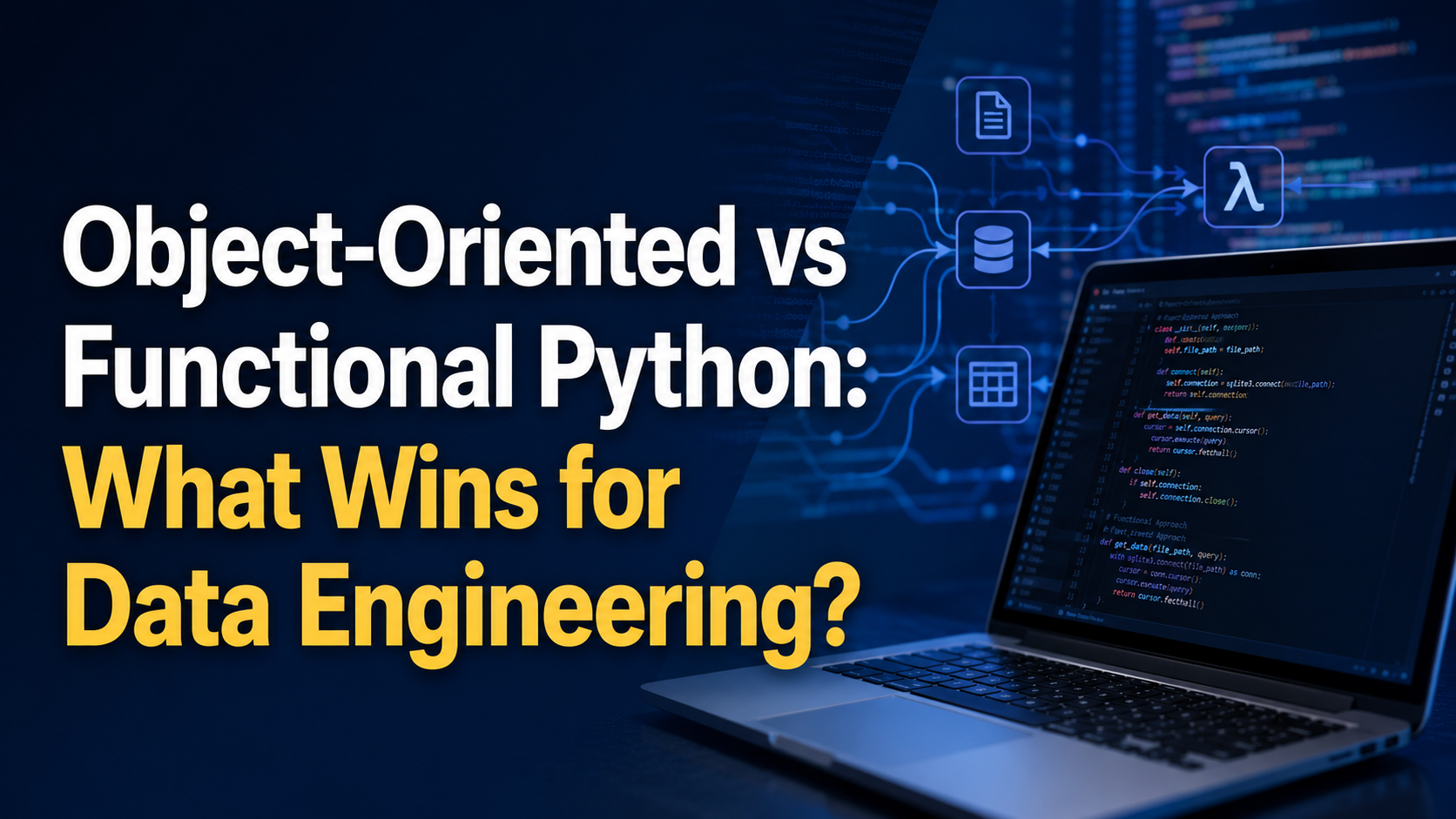
Object-oriented and functional Python cover different parts of a data pipeline, and strong data engineers use both without much thought. This is exactly why so many beginners get stuck trying to pick a “winner” before they even understand what each style is for. Joining a data engineering course in Aurangabad usually helps clear up this exact confusion in the first few weeks, since it walks through two ways to write Python, two different mindsets, and where each one actually fits.
Table of Contents
- What’s the Actual Difference Between OOP and Functional Programming in Python?
- Which Style Do Real-World Data Pipelines Use More, OOP or Functional?
- Do Data Engineers Need to Master Both Paradigms, or Is One Enough to Get Hired?
- How Does PySpark Lean Toward Functional Programming, and Why Does That Matter?
- Should Beginners Learn OOP or Functional Python First When Starting a Data Engineering Course?
What’s the Actual Difference Between OOP and Functional Programming in Python?
The core difference comes down to what each style is built around. OOP is about things, connections, configs, classes that keep their own state over time. Functional centres on actions: data comes in, gets transformed, and moves on, with nothing remembered in between. Grasping these Python programming paradigms for data engineering matters less for the definitions and more for knowing what each one is meant to protect: OOP protects state, functional protects flow.
Which Style Do Real-World Data Pipelines Use More, OOP or Functional?
Real-world data pipelines lean toward functional Python more often, especially in the transformation logic itself. Filtering rows, mapping values, aggregating totals- this work reads more like an assembly line than a network of connected objects. Since pipelines resemble math more than real-world entities, functional habits end up fitting more naturally.
That said, OOP still holds its place. Database connectors, API clients, and reusable pipeline blueprints rely on classes because that infrastructure has to hold onto state, tokens, retries, and configurations. Which Python style is used in real data engineering jobs usually comes down to this split: functional for the data itself, object-oriented for everything wrapping around it.
Do Data Engineers Need to Master Both Paradigms, or Is One Enough to Get Hired?
You don’t need to master both object-oriented and functional Python to land a data engineering job, but skipping either one completely tends to show up fast once you’re actually working on real projects.
Functional skills earn you clean, predictable data transformations, safer retries when a pipeline fails halfway through, and pipelines that scale across multiple machines without extra headaches. OOP skills earn you reusable connectors for databases, APIs, and cloud storage, structure enforced through validation classes, and no need to rewrite the same logic fifty times for fifty data sources.
Each of these solves different problems at different layers of the same pipeline, which is exactly why beginners shouldn’t jump into OOP or functional patterns without a basic Python foundation first. If you’re unsure whether your current Python level is enough to start, read our blog How Much Python Is Required Before Learning Data Engineering?
How Does PySpark Lean Toward Functional Programming, and Why Does That Matter?
Functional programming in PySpark becomes clear when you look at chaining methods like .filter().groupBy().agg(). It keeps data immutable, which is exactly what makes distributed processing safe. This isn’t a stylistic accident. When data can’t be changed in place, multiple machines can work on different chunks at the same time without stepping on each other.
Should Beginners Learn OOP or Functional Python First When Starting a Data Engineering Course?
Most beginners are better off learning functional Python first, since pipeline logic reads like a simple recipe, one step leading into the next. That foundation helps OOP concepts like classes and inheritance click faster later on, because the learners already understand why infrastructure needs structure and memory. This is how it’s taught in a best data engineering course in Aurangabad for Python beginners: functional thinking before OOP complexity.
Master OOP and Functional Python With AVD Group
If you’re still debating object-oriented vs functional Python for data engineers in Aurangabad, here’s the honest answer: there’s no winner to find. A good data engineering training program covers both, since real pipelines depend on both; one handles clean data movement, the other holds the surrounding systems together. Reach out to join AVD Group’s data engineering course and build this foundation the right way. The course covers the tools and structure to help you get there step by step.
Coming up next, we will discuss the security-side skills that are becoming part of a data engineer’s job.
Frequently Asked Questions
- Can mixing OOP and functional styles in the same pipeline cause maintenance problems?
It rarely does as long as each style is used where it fits: functional for transformations and OOP for infrastructure.
- How long does it typically take a beginner to get comfortable with functional Python basics?
A few weeks of hands-on practice with filtering and mapping data is usually enough to build real comfort.
- Are there Python libraries besides PySpark that favour a functional approach for data engineering?
Libraries like Pandas and built-in tools such as map and filter also encourage a functional style in everyday scripts.