

What Does a Beginner-Friendly AWS Data Engineering Project Look Like?
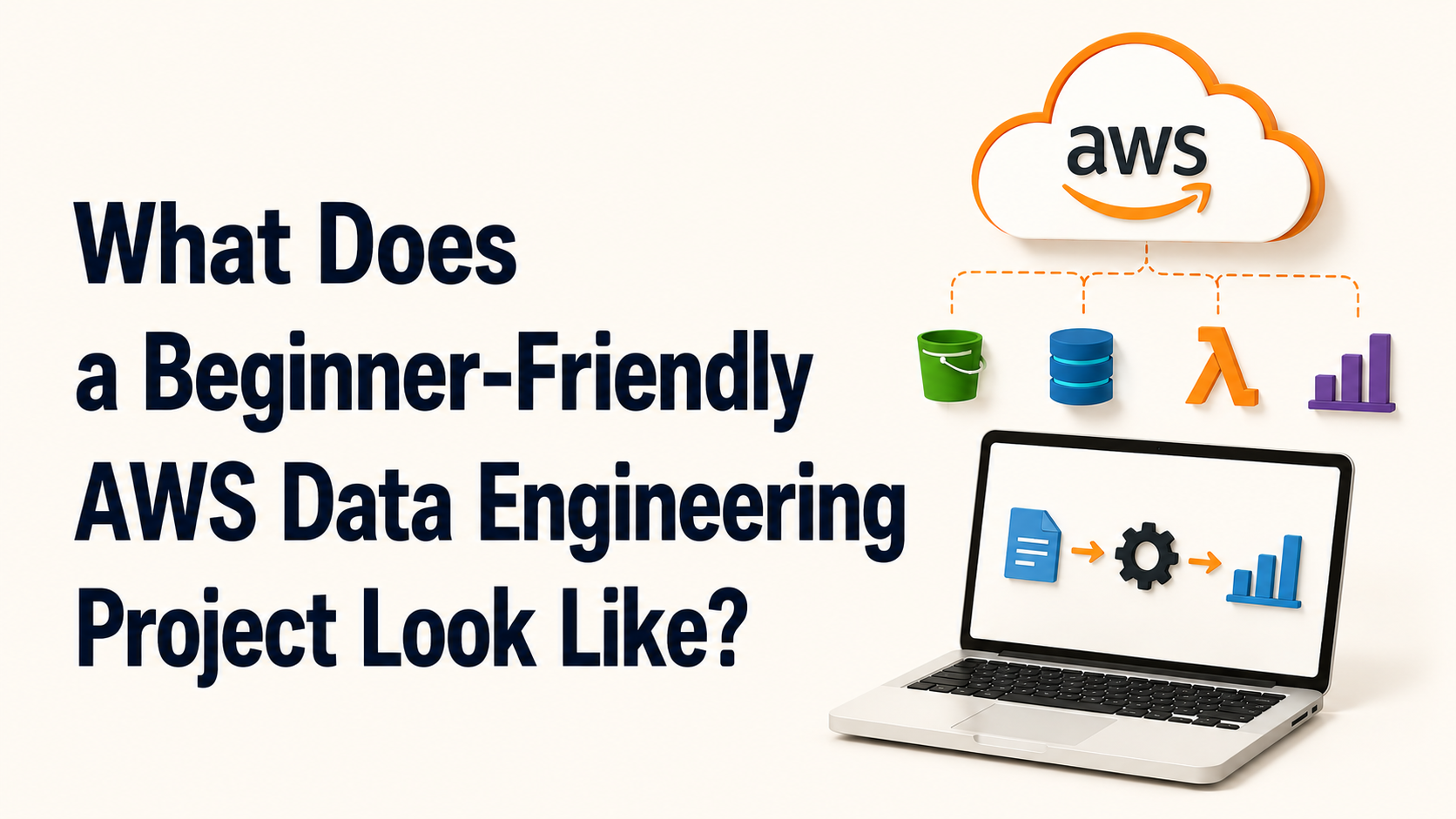
A beginner-friendly AWS data engineering project is usually a small, serverless setup that takes raw data, cleans it up, and makes it queryable. Most cloud platforms today offer free tier access too, so anyone can start practising without spending a rupee. The catch is knowing where to start and what order to learn things in, which is exactly why joining an AWS data engineering course in Aurangabad makes that first project so much easier to get right.
Table of Contents
- What Skills Can You Practice Through a Beginner AWS Project?
- Which AWS Services Are Easiest to Start Learning With?
- How Long Does a Beginner AWS Data Project Usually Take?
- Do You Need Prior Coding Knowledge to Start an AWS Project?
- What Mistakes Should Beginners Avoid in Their First AWS Project?
What Skills Can You Practice Through a Beginner AWS Project?
With a beginner project, you’re mainly learning three things: how to store data, how to clean it up when it’s messy, and how to pull out an answer by querying it. You don’t need fancy setup or years of experience to try this. That’s exactly what makes simple data pipeline projects for beginners useful. You work on small pieces that you can actually complete, one at a time.
Which AWS Services Are Easiest to Start Learning With?
Storage and basic transformation services are usually the easiest entry point for someone new to the cloud. A cloud storage bucket works like a big digital shelf, somewhere to dump files whether they’re raw or already cleaned up, and from there a simple transformation tool helps fix typos, remove duplicate rows, and turn messy data into something usable.
Some of the common starting points for beginners are:
- A Storage Bucket: Separate raw and cleaned files from the beginning; combining them later will only create more work.
- A Basic Transformation Job: This is where typos get fixed, formatting gets corrected, and junk rows finally disappear.
- A Query Tool: Run a simple search command straight on the files sitting in storage. There is no extra setup or waiting around.
- An Optional Chart Tool: If numbers alone don’t tell the story, this turns them into something even someone outside the project can look at and understand.
Read Next: What Data Engineering Projects Can Help You Get Hired Faster In 2026?
How Long Does a Beginner AWS Data Project Usually Take?
Most beginner projects wrap up in a few days if you take them step by step, not weeks, not months. It’s closer to assembling furniture with an instruction manual, slow and confusing at first, then oddly quick once the pattern clicks. Hands-on AWS practice for first-time learners usually means downloading a small dataset, uploading it to storage, running a cleanup job, then querying the results with a few simple commands.
Do You Need Prior Coding Knowledge to Start an AWS Project?
Getting started only needs a working sense of data; coding knowledge can grow alongside the work itself. Many entry-level cloud computing exercises are set up with this in mind, using visual tools and simple scripts so newcomers aren’t stuck needing full programming skills. Coding helps as things progress, but it isn’t a locked gate standing between you and the starting line.
What Mistakes Should Beginners Avoid in Their First AWS Project?
The most common mistake is skipping the planning stage and jumping straight into tools. Before touching any service, it helps to sketch out where your data comes from, where it needs to land, and what questions you want answered at the end.
Some of the mistakes worth avoiding early on:
- Skipping the Planning Stage: Starting with tools, without a rough map, usually leads to messy folders and confusing results later on.
- Chasing Something Flashy: Building a portfolio project on AWS isn’t really about the fancy stuff. It’s more about showing you how data moves from raw files to something clean and usable.
- Overcomplicating the First Attempt: A step-by-step guide to your first cloud project works best when you keep it simple.
- Ignoring Small Wins: Every step you finish makes the next one easier. Skip that momentum, and the whole project starts feeling harder than it actually is.
Want to Learn AWS Data Engineering? Join AVD Group
One AWS data engineering project isn’t going to get you a job by itself. It’s the thing that gets you started, though, and once it’s done, you’ll actually have something to talk about when someone asks what you can do.
Contact AVD Group to join the data engineering course today. Learn the tools, build the project, and walk away with something real to show for it.
Wondering what to learn next? We break down Python vs Java for data engineering roles in the next blog.
Frequently Asked Questions
- Is a beginner AWS project enough to apply for jobs?
A single project alone rarely gets you hired, but it does give you something concrete to talk about in interviews. Pair it with a couple more projects over time, and it becomes a genuine portfolio.
- Can you complete a beginner AWS project without paid tools?
Most beginner-level services offer free tier access, which is more than enough to build and test a small pipeline without spending money upfront.
- Should you follow a tutorial or build from scratch?
Starting with a guided tutorial makes sense for your first attempt, since it helps you understand the flow. Once that clicks, rebuilding the same project from scratch strengthens what you’ve learned far more effectively.